
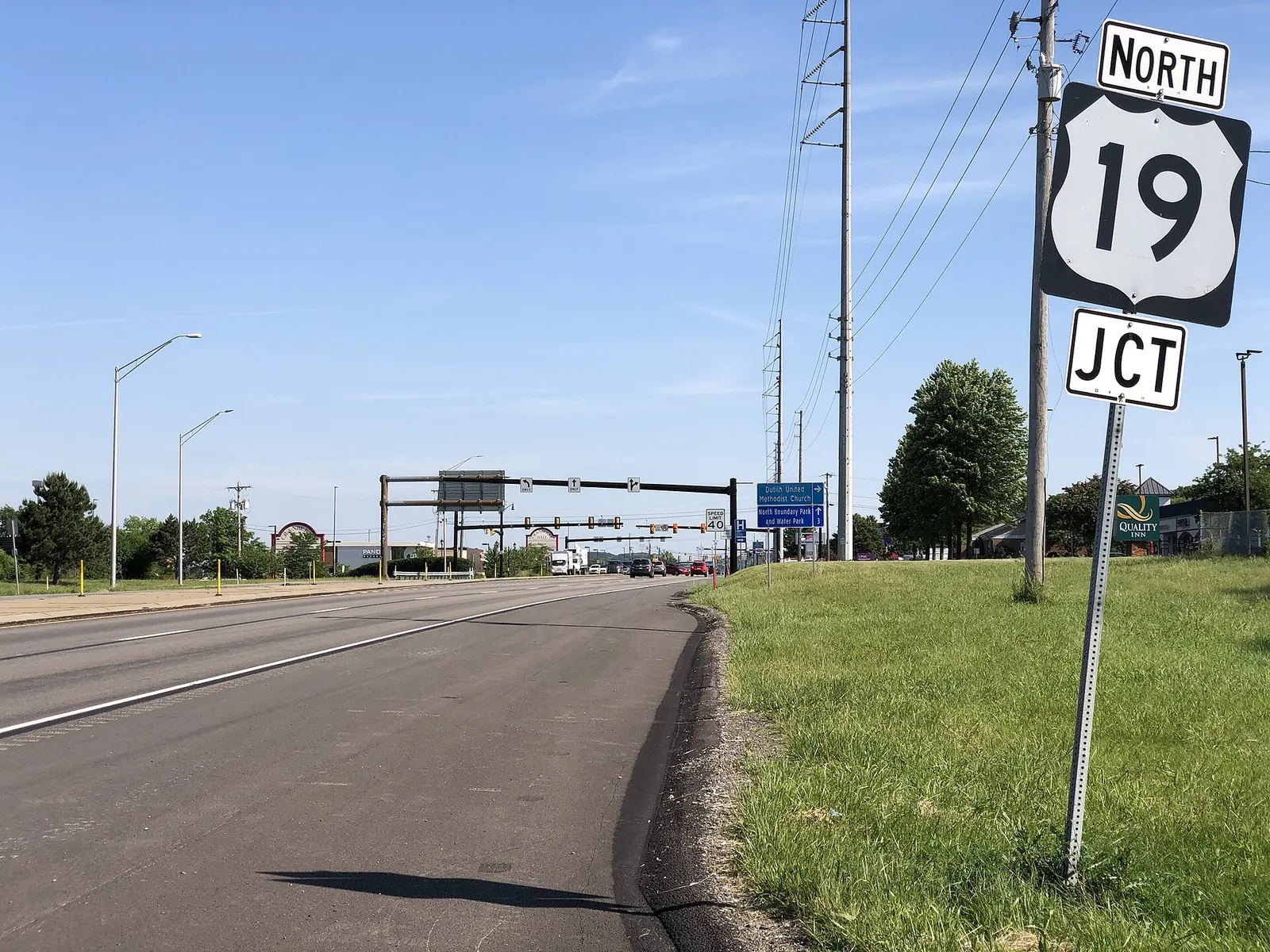
Butler County, Route 19 and I-79
ESD Flooring in Cranberry Township
Static control floors for Cranberry Township operations, built to the band your process requires rather than to a colour chart.
What it is
Why Cranberry Township needs it
Cranberry is where a lot of Western Pennsylvania's engineering work sits, and engineering campuses are a specific kind of floor problem. You are rarely coating a bare warehouse. You are working around occupied offices, a lab or two, a test bay, and a schedule that will not stop for you.
Static control here usually shows up as an audit finding rather than a failure. Somebody writes an ESD control program, the program says the floor is part of it, and now a floor that has been fine for fifteen years has to produce a number. That is a solvable problem, and it starts with measuring what you already have.
Butler County
The bonding plan
Every ground point, strip and termination gets drawn before anything is poured, because a floor that measures right in one bay and fails in the next is a bonding problem.
Where we work
The Cranberry Township corridor
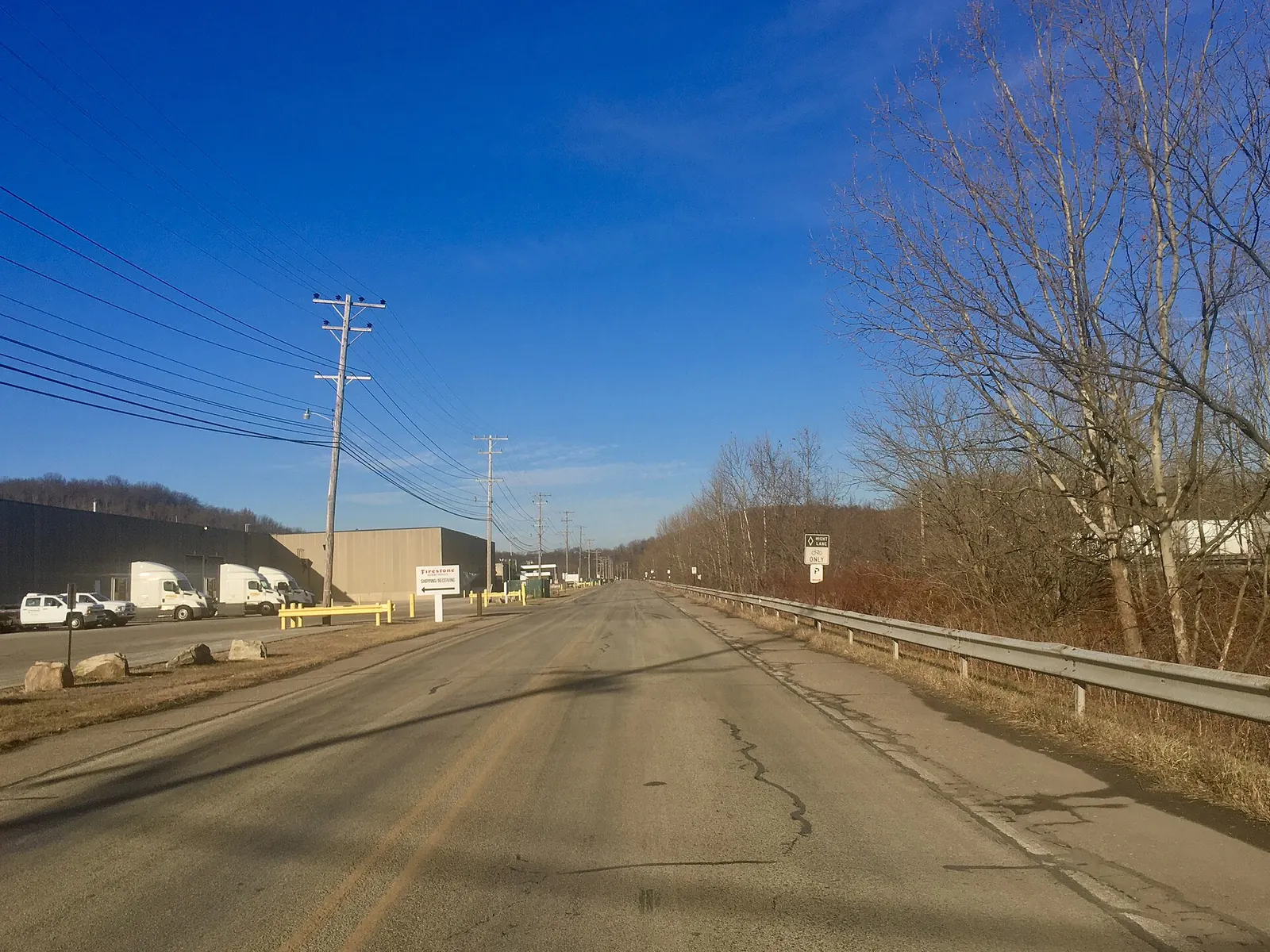
We cover the Route 19 and Interstate 79 corridor, the Cranberry Business Park, and the engineering campuses either side of Freedom Road.
nuclear engineering and power services
corporate engineering campuses
light manufacturing and assembly
We are twenty minutes up Route 19 from most of the business park, so a slab walk is a morning, not a project.
The standard
Built to ANSI/ESD S20.20
Measured to ANSI/ESD STM7.1. Which band you need is set by what you build, never by preference.
ohms, logarithmic
S20.20 system ceiling, 109 ohmsfloor plus footwear plus person, to STM97.1
- Conductiveless than 1.0 x 10⁶ ohmsCharge has to leave the floor fast.
- Static dissipative1.0 x 106 up to less than 1.0 x 10⁹ ohmsCharge bleeds off in a controlled way.
- Ordinary epoxyfar above 1.0 x 10⁹ ohmsHolds charge instead of moving it to ground.
The whole system has to measure under less than 1.0 x 10⁹ ohms to ANSI/ESD STM97.1, and a person walking on it has to stay under less than 100 volts peak to ANSI/ESD STM97.2.
Before anybody quotes
What we look at first on a floor like yours
What the existing floor reads today
ANSI/ESD STM7.1 on the floor you have now, before anybody quotes a replacement. Plenty of floors sold as ESD years ago have drifted out of band, and plenty of floors nobody thinks of as ESD are already inside it.
Whether you can give up the space at all
On an occupied campus the answer is usually no, not in one piece. The floor gets sectioned, and the grounding network gets tied together as the sections join, so production keeps running on the half that is still down.
What the cleaning crew is putting on it
One coat of ordinary floor wax is insulative, often ten to the eleventh ohms or higher, and it takes a compliant floor out of band with nobody touching the specification. The cleaning procedure changes the day the floor goes in.
By name
Every standard on this page
Nothing here is our own designation. Look any of them up before you talk to anybody.
- 01The floorSTM7.1 measures this alone
- 02The footwearpart of the system
- 03The personpart of the system
- 04Building groundcopper strip, bonded
STM7.1 reaches the floor, and stops there.
STM97.1 and 97.2 reach all four links.
STM97.1 under 1 x 10⁹ ohms, and STM97.2 under 100 volts walking
That is the whole chain, measured together. The floor on its own never settles it.
ANSI/ESD S20.20
The ESD control program standard an audited facility is held to.
ANSI/ESD STM7.1
How the resistance of the floor itself gets measured.
ANSI/ESD STM97.1
How the floor, the footwear and the person get measured as one system.
ANSI/ESD STM97.2
The walking test. Peak body voltage a person generates on that system.
ASTM D257
The general DC resistance method the flooring methods descend from.
NFPA 77
Recommended practice on static electricity where ignition is the risk, not part damage.
Static control across the metro
ESD flooring nearby
Same standard, different floor. Pick the one closest to your operation.


Scheduling
Can you pour it in Cranberry Township this week?
Live air and dew point over Route 19 and Interstate 79 corridor, the Cranberry Business Park, and the engineering campuses either side of Freedom Road, scored against ASTM D3276. Five degrees of margin over the dew point, held through prep, application and cure, or the floor blushes while it is going off.
Reading conditions over Cranberry Township...
What this is and is not
This reads the air. The standard governs the slab, and concrete lags air by hours, sometimes by most of a day after a cold night. A slab can still be under the dew point while the air above it looks fine. So treat this as your scheduling answer, not your go-ahead: the go-ahead comes off a surface thermometer and a hygrometer at the door on the morning of. Cure windows also move by system, so the product data sheet on your job is what governs.
FAQ
Static control questions
The three that come up first on a Cranberry Township floor. The full twenty five, on resistance, grounding and test method, are on the Pittsburgh page.
Yes. The floor gets sectioned and each part's grounding ties in as the work reaches it, so occupied offices and labs on the other side of the building keep running. That is the normal way to work an audit-driven retrofit on Route 19.
An ESD control program usually writes the floor in as a requirement years after it went down, and at that point “it has worked fine” has to produce a number. ANSI/ESD STM7.1 measures what is actually there today, and plenty of floors sold as ESD years ago have drifted out of band with nobody touching them.
Yes. One coat of ordinary floor wax is insulative, often 10 to the eleventh ohms or higher, and it takes a compliant floor out of band with nobody having touched the coating itself. The cleaning procedure changes the day the floor goes in.
Read all twenty five static control answers on the Pittsburgh page, including resistance bands, grounding and test method.
Start here
Tell us about the slab
Square footage, the band you have to hit, what is on the slab now, and your traffic. If you do not know the band, that is a normal place to start.
Free Quote In 24 Hours
Ready For A Floor Built To Last?
Get a free, no-obligation quote in 24 hours. Real pricing, real timeline, real Pittsburgh craftsmanship.